

Keep Fish Wet Blog
January Keepemwet Challenge Winners

Congrats to our January winners @sonbell and @bjstone14! You both will dig the warm and fuzzy goodness of your new Ninja Suits thanks to our friends at @ninjasuit by @airblaster.
Stay tuned to our Instagram page to see what we cook up for February's contest!
Ambassador Profile: Travis Sylvester

Travis Sylvester working his Jedi color pencil magic.
Travis Sylvester is an artist out of the Salt Lake City area. His love and appreciation for the amazing colors and markings of trout can be seen in his artwork.
Colored pencils are his medium of choice, and have been since he was in high school. “I really enjoy the results that I get out of colored pencils, they allow me to create very vibrant images with hard sharp edges, while at the same time I can smoothly transition through all of the brilliant colors on a gill plate.”

"Felicity" is drawn from a #keepemwet photo of a wild Eastern Oregon desert rainbow trout.
Travis’s artwork and style has become widely recognizable in the fly fishing industry. It is often mistaken for oil or acrylic paintings. Although Travis has not attempted using paint of any kind, he does state that he can see himself “giving it a whirl” in the future.
“My favorite part about drawing trout is trying to capture that awesome shimmery wet look. I also like to exaggerate the tones and glossy reflections that can often be seen around their eye or down their backs. If my completed drawing looks wet, or if it appears that you could reach out and touch the fish, I am happy with it.”

"I Call Bull" is drawn from a #keepemwet photo of a wild bull trout from the Imnaha River.
Travis gets inspired to continue his artwork from either catching beautiful trout, viewing fantastic trout photography, as well as viewing great artwork from other fish and trout artists. He continuously strives to make each new piece even better than the previous while continuing to establish his own unique style. Travis also likes to create wild digitally manipulated images from his own original drawings in between projects.
“For the most part, I am as self-taught with my artwork as I am with fly fishing. I still have a ton to learn about fly fishing, I feel that trying to figure things out on the water is half the fun. Although I do enjoy wading a mountain creek or river, I tend to find myself in my float tube out on a small lake or pond when I get a chance to go out.”

Travis hoofing his way to a high mountain puddle.
Some of Travis’s work can be seen on Montana Fly Company’s “River Camo” product line, Patagonia Tech shirts, and Fincognito Apparel. His work has been published in several popular magazines such as; Fly Rod & Reel, American Angler, Fly Fusion and H20. Giclee fine art prints on treated loose canvas, gallery wrapped canvas or fine art paper can be purchased from his website.

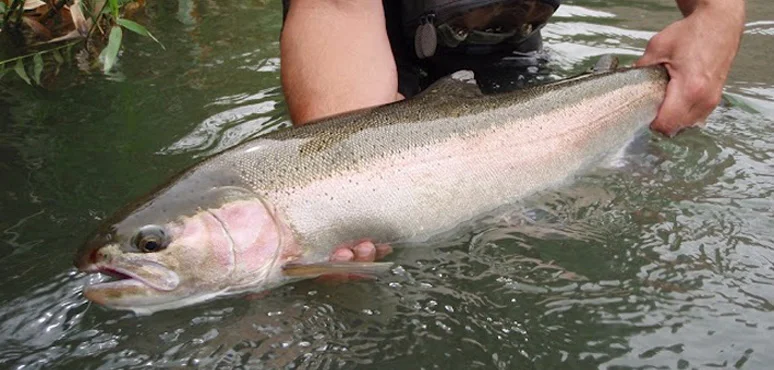
"Goliath" is drawn from a #keepemwet image of a wild N Umpqua winter run steelhead caught by angler Adam Haarberg and carefully lifted just above the water's surface for the few seconds required for a photo.
The Keepemwet Story
It all started with Instagram. That's the place I first noticed hashtags taking off and their great potential to link topics. What drove me nuts was how many photos I was seeing of fish up on the dry bank and tagged #catchandrelease. I wondered how many people realized those fish were not likely to survive, and continued the practice to keep feeding their social media audience. I wondered how many people were drawn to fishing because of the stunning imagery they'd seen online, and viewed this kind of practice as the norm for how C&R works and what it looks like. With camera phones in every angler's pocket and the insatiable expansion of social media, it seemed like catch & release needed a voice. A way of nudging anglers to consider that how they handled & released fish made all the difference in whether it lived or died- despite what the hashtag said.

One of my early trout "portraits" and example of the Keepemwet style I hoped social media would embrace.
I recalled a trout photography presentation I'd given years back and one of my sub-titles "Keep 'em Wet". The phrase suggested a primary element of ideal C&R and packed together as a hashtag had a catchy spark to it. I wanted to communicate many things at once, and a fish that was kept wet in the first place would likely avoid many additional handling impacts. So I created a hashtag for my trout and steelhead photos- #keepemwet.
From that time in early 2013 the tag caught on with friends and colleges in fly fishing culture. A bit later a buddy pointed out quarrels breaking out on social media- conflict, name calling and spats over the use of the tag. People were leveling accusations at each other as hypocrites for using the hashtag while also posting photos of fish out of water. The tag was being used as a divisive insult and polarizing the fishing community. I was completely blow away at how out of context and confrontational it was becoming. With the help and encouragement from Paul Moinester, I decided to take ownership of the phrase and it's meaning- as I'd intended it.

From left Josh Prestin, Bryan Huskey and Paul Moinester photograph a resting brown trout. Alison Kelsey photo.
We set out to define keepemwet as synonymous with the multitude of science-based principles of catch & release, and assembled a coalition to promote these examples in this new era of social media. We reached out to Dr. Andy Danylchuk, a leading fisheries scientist and professor at University of Massachusetts Amherst. Andy expressed support and enthusiasm for the keepemwet concept and joined the team. I reached out to the many friends at different companies within the fly fishing industry and explained the support we were seeking to promote better C&R practices. Companies, media outlets and conservation organizations joined us left & right. Keepemwet Fishing™ was born.
Looking ahead to what Keepemwet Fishing can become. Paul Moinester photo.
Looking ahead my hope is for Keepemwet Fishing to unite anglers of all kinds while promoting C&R practices that benefit everyone. In the future I think it can expand beyond fish handling to larger habitat and conservation topics, tying in relationships and becoming a bridge between science and angling communities. Despite the political leanings or stereotype profiles of the vast range of angler groups around the world, they all want to catch more fish, period. Science is revealing new variables that impact overall catch rates, and Keepemwet Fishing wants to share that understanding.
Thanks for coming along.
Bryan Huskey
If You'd Only Ever Seen One Wild Steelhead Video...
... then you'd have a pretty good grip on our impact to steelehad habitat if this is the one you'd watched. After first hearing about Pass Creek from veteran Umpqua guides years ago, I pull up this gem every few years and it moves me to the core each time with it's scratchy audio, flickering images and priceless narration. Only Running Down The Man and a few other Felt Soul films impress me this much.
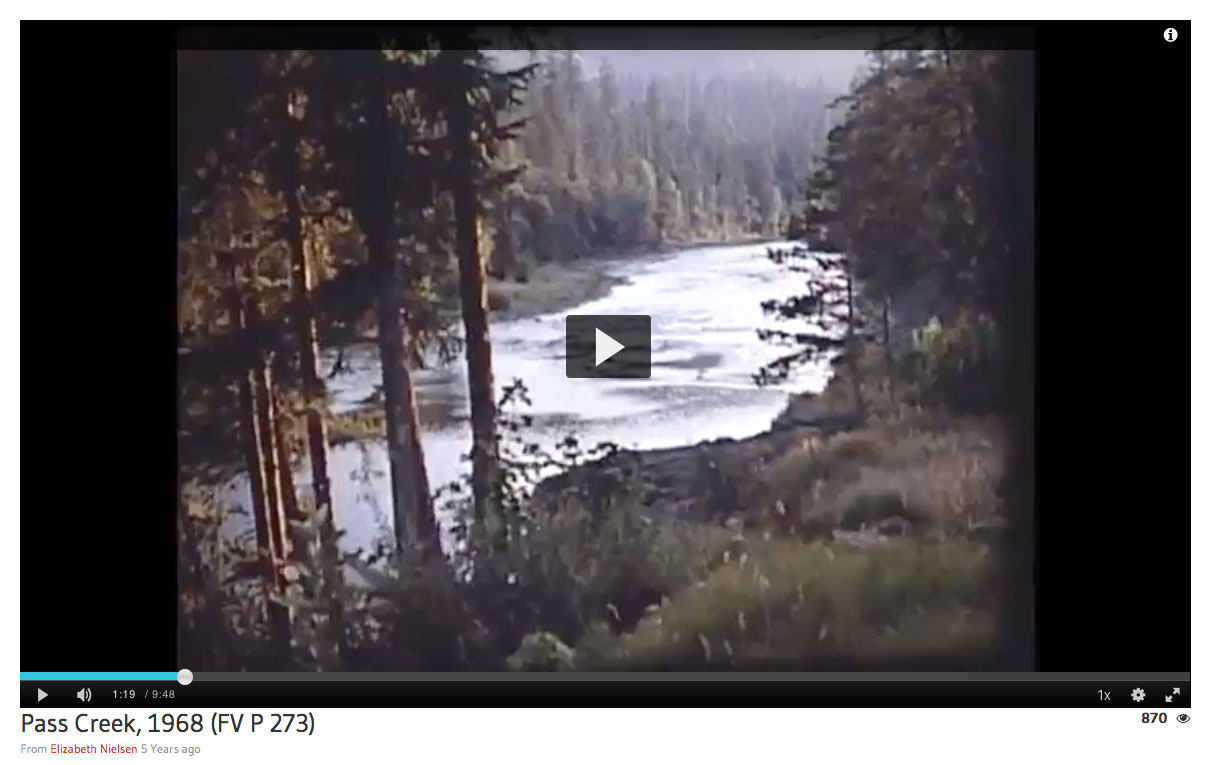
Click to play. "Provides a penetrating account of a once-rich steelhead trout stream threatened by careless logging practices. Focusing on Oregon's North Umpqua River Basin, the film portrays the impact of clearcut logging on the small tributary streams where most of the river's steelhead are spawned and reared. The subtle interdependence of land and water and the disruption of the aquatic environment caused by stream-clogging debris and warming water are dramatically presented. Hal Riney and Dick Snider, advertising executives and fishermen, produced the film and donated it to Oregon State University. It was widely distributed and viewed in Oregon and throughout the United States through the 1970s and was influential in changing logging practices in the Northwest.
Easily the most moving, well-connected piece I've ever seen on the topic, the kicker is that this film was made in 1968!!!
Give yourself time to watch this piece. It's about ten minutes long, and the first minute or so is silent so don't try to troubleshoot your speakers. Pour a drink, silence your phone & sit back for a bit of watching and thinking.
Thanks.
What Keepemwet Means to Josh Udesen

Josh Udesen at home, on the water.
Long before Keep ‘em Wet entered the lexicon of hashtags and facebook posts I had a gut feeling there was a need to keep the fish where they should be. I won’t say I was militant or even on the forefront of some sort of conservation movement, I simply understood the impact of keeping a fish out of the water. As any rookie guide can probably attest to, learning to properly handle fish is acquired through a few hard lessons. It is not with great pride, I can admit I likely killed a fish or two to get a hero shot for a client.

Old school Alaska, hip waders and all.
At least one memorable incident had a lasting impact on my fishing psyche. It was probably two decades ago, in my first year of guiding southwest Alaska. Regulations allowed sport fisherman to harvest rainbows, but as per lodge policy, we always released them, regardless of the fish and game regulations. In this case, after a long struggle, a botched netting, a hand to hand passing of the fish with little rest, several drops in the mud and sand, and a multitude of photos with an array of cameras, this monster rainbow was back in the water to be “revived”. As I tried to get it going, I knew it was not going to turn out well. There are few things that feel worse as a fisherman than seeing a beautiful fish, worthy enough for a grip and grin shot, struggle to be revived and ultimately end up where it should not – belly up. It gave me a head shake, wiggled free and immediately twisted to it's side. As I chased the struggling beast of a rainbow down river, trying to grab it to resuscitate, I knew it was a lost cause. As it sunk into a pool, I was pissed. What a waste. I could not be too angry with the client, everyone wants the bragging rights to a huge a rainbow. Instead, I was mad I let it happen. I won’t go so far as to say I made a policy or changed radically, I just knew I had to work fast when a fish was landed. Get the fish in, keep it in the net until the photo is ready, snap a shot and get it back in.
With that said, over the next decade or two I had no benchmark or clear delineation of what was best for the fish while still getting a good photo for a client, a friend or myself. I have to admit, as a fisherman, the obvious implications of the keeping ‘em wet ethos seemed like common sense, but it was never really verbalized. I’ve always veered from the tail splitting green mesh nets, dragging fish on the beach or the finger in the gill hero shot as a guide, but I did not have a clear method or approach to handling fish. I never realized I have a ton of fish photos, but rarely is there a shot of me holding the fish. Other than a hatchery steelhead destined for the grill, rarely did the fish get my greasy mitts all over them. Ultimately, the fish was the focus on my photography not me with the fish.
It was not until I was introduced to Bryan Huskey’s photos, and subsequently, Bryan himself that I understood what Keep ‘em Wet really meant. His photos were remarkable with an element unlike anything I’d seen. The artist in me saw something very unique in a world of "fly fishing photographers". In one of our first meetings I asked him about how / why / what gives him the ability to portray something with such a unique perspective. His answer was simple, "I don’t like to take the fish out of the water.” He followed up by explaining how he was hardwired to keep the fish in the water, touch it minimally, and often did not have someone to hold the fish or land the fish and as a result, the camera angles were always foreshortened, cropped or combined water and an aspect of the fish. It was a brilliant accident. He told me how he sometimes had to lay down with his back on the bank, butt on the edge and his legs in the water in order to get the fish in the frame and keep it in the water. He explained the need for an exceptionally long handled net because you can wedge it between your legs, keep the bag in the water, deal with disengaging the hook and get a shot or two - all while the fish never left the water. His focus on keeping the fish in the water made his photos remarkable. I not only respected the craft and the outcome, but I understood how simple it was to respect the fish and get the shot.
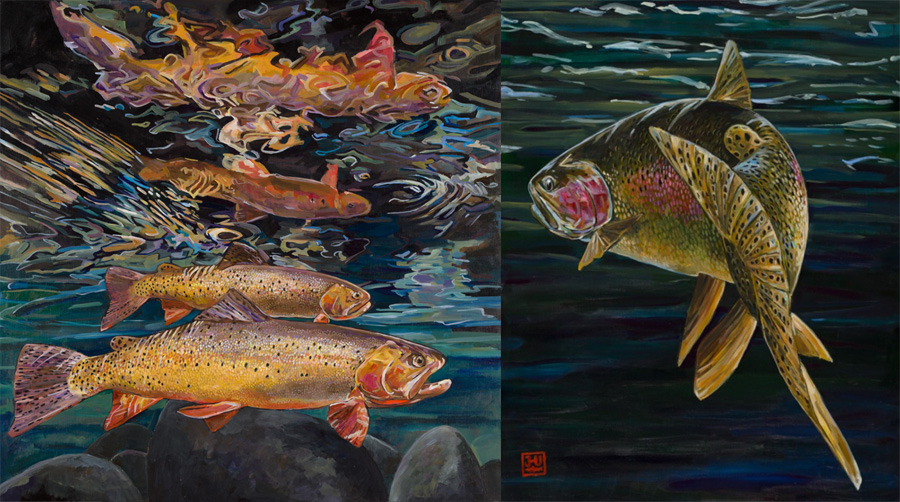
Just a few examples of the incredible ways fish can suspend in Josh's artwork, and our imaginations.
As an artist, water and fish are intertwined. Although I paint lots of fish, most of my paintings are more than fish. Every person who as ever netted a fish in a clear, freestone creek knows how magical those trout look, but each fish is framed by the water. The best images of fish include water. Fish are amazing to paint and draw, but the water is what makes the image complete. I’ve always been drawn to reflective and refracted surfaces. Water has a way of multiplying and enhancing anything. Put a simple pencil in a clear glass of water and see what happens. It bends, cuts in half, expands, and ultimate it changes. Likewise, the colors of the fish are bent, twisted, more abstract and enhanced when combined with water. With water, you can use brushstrokes boldly and get away with it. You can add outrageous colors and make it work. It is fun to play with the water that surrounds fish. In other words, my art is a natural way of encouraging and promoting all of what Keepemwet Fishing embodies.
Ambassador Profile: Uros Kristan

My fly fishing addiction started quite early for me. Since the early age of ten my father had been regularly taking me and my younger brother fly fishing on one of the best European chalk streams, the river Unica. There I have made my first casts and also have caught my first fish with a dry fly. Since then, fly fishing has always had a huge impact on my life. I cannot explain my feelings when I am standing by a river, pursuing trout, grayling or some other fish. Maybe it is something like visiting a church for some; it lets me connect with everything - from my life, my own thoughts to the nature. With years I got really involved with fly fishing and a few years back I also set my mind to it, that fly fishing is something that I really want to do “professionally” for the rest of my life.

As a big nature lover, conservationists and supporter of sustainable fishing I first got involved in my local angling club Vrhnika, where I am a member of the environmental group and also an angling warden. I was also collecting and inputting data for our biggest online database that is run by the Angling Association of Slovenia and has more than 10.000 entries on small polluters of our local rivers. In the more recent years I have also established my own guiding services Urko Fishing Adventures, where we offer and promote amazing opportunities for fly fishing on the best rivers in Slovenia, with some unique and rare fish species as the Marble trout and the Danube salmon (Hucho Hucho).

Being a guide also gives me the opportunity to promote and share my beliefs or let’s say my ethics on how a modern fly fisher should act on the river and how he handles his catch to minimize its stress as much as possible. This also means that the #keepfishwet movement is something that I feel right at home with and also reflects my own stand on the matter. And did I forget to mention that I also love to take photos of my fishing adventures too? I am definitely not a professional with a camera, but I do manage to occasionally get some shots right! ;)
Tight lines to everyone and #keepfishwet!

Ambassador Profile: Marty Sheppard

Born and raised in Oregon, Marty grew up on the banks of the Sandy River. With his dad as tutor and angling mentor, Marty landed his first steelhead at the age of five. During the 70s his dad continued to hone and shape [perhaps unknowingly] Marty’s future by taking him fishing, seemingly every day, and instilling in him the instincts and techniques for pursuing steelhead. Much of his fly-fishing inspiration came from devouring books, especially those written by such notable and insightful naturalists as Roderick Haig-Brown and Bill McMillan. While still a young strapling in the 1990s, Steve Kruse took Marty underwing and taught him the art of Spey casting. Perhaps it should come as no surprise that all these elements now manifest themselves as Marty’s unbounded enthusiasm for guiding—backed up by over a decade of professional experience in the “field”—and an almost missionary zeal for teaching others and sharing in the pure joy of rivers.

In addition to being a veteran steelhead guide, Marty is also a photographer.
New KEEPEMWET CHALLENGE Contest with Ninja Suit by Airblaster
Let's roll into the new year with a fresh Instagram #keepemwetchallenge from our latest Keepemwet Fishing partner Ninja Suit by Airblaster. For this challenge "Gotta be crazy" show us the most brutal winter weather you brave out on the water fishing. Tag your Instagram photos #keepemwetchallenge and #ninjasuit this month and we will pick men's and women's winners at the end of January.

Gink & Gasoline Keep Em Wet Winner
Our friends over at Gink & Gasoline have had a great run with thier Keep Em Wet photo contest. Folks are really taking note of this silly phrase and the impact it's having on how catch & release fishing is portrayed on social media. Our sincere thanks to all the individuals who share this awareness and the media outlets like G&G who really boost it's profile.

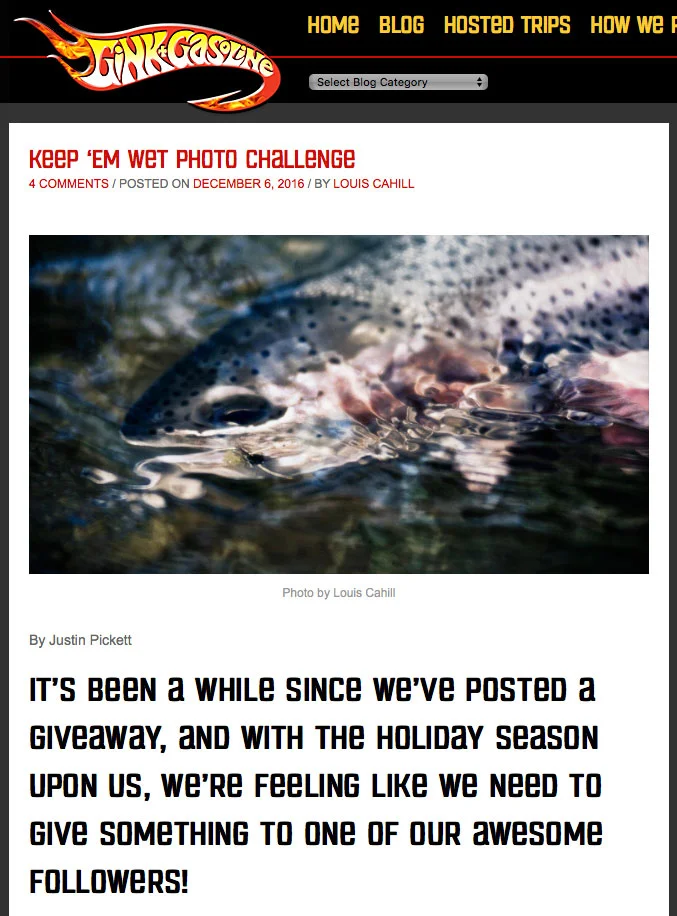
Gink & Gasoline Photo Challenge
Our friends over at Gink & Gasoline are sharing in the Keepemwet spirit and promoting a Keepemwet photo contest. Have a look and send in your entry here
Bonefish & Tarpon Trust "Keep 'Em Wet" Photo Contest
Our friends and partners at BTT are helping to promote wetter handling and photos of catch & release fish- including the all important salt species.
BTT's KEEP 'EM WET® contest runs through December 15, 2016! The contest is sponsored by Orvis in partnership with Keep 'Em Wet Fishing, YETI Coolers, ARC Fishing, Montauk Tackle and Fishpond.

Click above to visit BTT and learn details. Prizes are incredible so note this ends December 15th!
Ambassador Profile: Jeff Hickman

Jeff taught himself to fly fish and tie flies when he was 10. Growing up in a lodge on Mt Hood that he helped his mom manage, he saved up his housekeeping wages to buy his first Spey rod at 12. Hitchhiking to the river before and after school, he was doomed to a life of fishing addiction. The strong addiction lead to fly shop employment, guiding in Oregon and Alaska and even management at a bonefishing lodge in the Bahamas. Jeff started Fish The Swing in 2011 to show his commitment to "swing only" and now owns and operates three well respected and sought after fishing/guiding programs in Oregon as well as Kimsquit Bay Lodge on the Dean River in British Columbia. Website. INSTAGRAM
Monkey see...
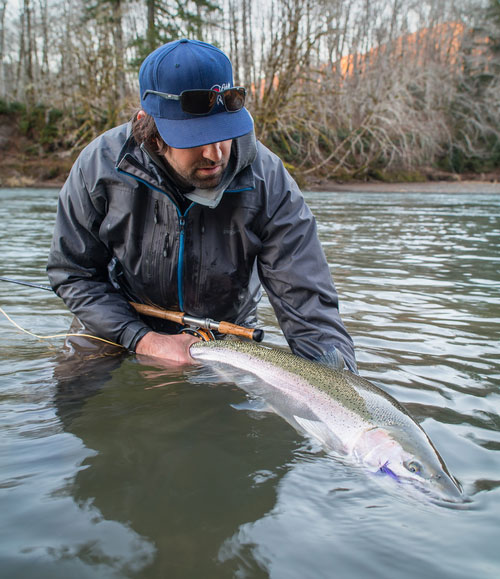
Keep the fish wet. Get your photos. It's a catch & release no-brainer.
For many of us, this whole #keepemwet thing is just a no-brainer. We've long had an awareness that the fish we plan to release need to be handled carefully and wet. We get it. We're familiar with the science about different species in different conditions and how the scale moves relative to those factors. Awesome.
Here's another take on why keepemwet matters, my take, and the largest root of the movement: It's all about how we represent fishing via the examples we set on social media. We all know that todays youngsters are born & raised by what they see on screens. They still latch on to certain activities- such as fishing, and consume the respective content we feed them. They follow social media of companies, groups or individuals they think are cool and want to emulate. You've seen the trendiness of certain poses with fish right? Those all start with one picture then multiply. Everyone copies everyone else, it's just the nature of things.
Since its inception, my sincere hope for #keepemwet is to set examples that others want to copy. It's great to share the science, encourage a moral obligation, promote stewardship of resources yada yada. But in the end, if we can just make better and wetter fish handling the standard practice, simply "the way to do it if you're anybody" and not try to force it- I think it will have the best chance of taking root and moving the needle of what C&R fishing looks like on social media.
Activities all have their own culture that has developed over time by crusty old veterans leading up & comers. Processes and general etiquette's are formed then passed down. Think of popular boat ramps or surfers in the swell lining up for their turn. It feels to me like fly fishing is experiencing a merging of two generations- those who've been at it for decades and those who've picked it up in the last few years because of the juicy images they've seen on a screen. So in a way there has not been as much in-person mentoring taking place. I believe we have an opportunity to influence the "standard practice" of catch & release by keeping fish in the water or visibly dripping in practice and in photos. All I've intended with the keepemwet hashtag and subsequent movement is to promote that. It's not my nature to cruise social media commenting on posts of wild steelhead laying in the dry dirt and tagged #catchandrelease, so this has been my way to take action passively, to chill out a bit and just say "Hey it's all good, but this is how I like to take photos of fish".
The support from conservation organizations, companies and individuals have enabled this phrase to evolve into something of a movement, and an opportunity to go one step further in explaining and defining the keepemwet concept via Keepemwet Fishing and Keepemwet.org. In the big picture, this concept affects every person around the globe that tosses a line in the water. And in practice has the opportunity to benefit everyone without a single drawback. I think that's something worth promoting, and I hope you agree!
Ambassador Profile: Mia Sheppard

Threetime world champion spey caster, accomplished guide, conservationist, upland bird hunter, skier and mother, Mia Sheppard, grew up in Tennessee, chasing trout and hiking the beautiful Great Smoky Mountains. Fly fishing caught her attention in 1996 and in 2001, Marty Sheppard, her husband, introduced her to spey casting, and connecting with steelhead. In 2003 they purchased Little Creek Outfitters, a outfitter deep rooted in fly-fishing since the early 90’s, guiding anglers into steelhead, trout, and smallmouth bass on Oregon Rivers.
Committed to conservation, she works for the Theodore Roosevelt Conservation Partnership, is a river steward for Native Fish Society, the conservation chair for IWFF and supporter of Deschutes River Alliance, Trout Unlimited, Casting For Recovery, Fly Fishing Collaborative and Keep Fish Wet. Mia has contributed to the books; Wild Steelhead: the Lure and Lore of a Pacific Northwest Icon and 50 Best Places Fly Fishing the Northwest. She is an ambassador for Simms Fishing Products, Airflo Lines and Field Advisor for Winston Rods. When she isn’t fishing she can be found chasing upland birds or skiing Mt Hood with family and friends. Website. INSTAGRAM


Ambassador Profile: Josh Udesen

I never really considered the idea of art as a career, so my focus was always on the fun of art. In college I took as many art classes as I could, simply because I loved them, not because I ever imagined I would do something beyond a hobby. Even if I never considered an art major or thinking of a career in art, I continued my personal goal of educating myself in painting, drawing, ceramics and printmaking.
My "new" career as an artist was preceded by a long list of careers that have shaped both me personally and the art I do today. I've been teaching 11th and 12th grade History and Comparative Religions at Riverstone International School in Boise, Idaho, for the past nine years. Prior to moving to Boise I spent several years living and teaching in Tashkent, Uzbekistan (not a typo - I did live in Central Asia), eight years teaching in Central Oregon and a few years learning to teach in Alaska.
As I developed a teaching career I was a long time fly fishing guide on some of the greatest rivers on earth. I spend six summers as a guide on the Deschutes River in central Oregon working for the Flyfisher's Place out of Sisters, Oregon. Before guiding in Oregon I was a guide for Tikchik Narrows lodge in the Bristol Bay region of Southwest Alaska.

Ambassador Profile: Dave McCoy

Keep Fish Wet: Why do you believe Keep Fish Wet is important?
Dave McCoy: As someone who lives in the PNW and has grown up pursuing anadromous species of fish my entire life, it is difficult to watch as our stocks of fish have declined to morbid, maybe unrecoverable levels. Yet we continue to be able to fish for many of them and by keeping them in the water during handling and quickly playing them, my hope would be that the mortality rate for C&R would be lower. KFW is akin to when Catch and Release was emerging on the scene, many just couldn't wrap their heads around why you might do such a thing. Decades later, here we are with many stocks of fish around the world in peril and C&R might be the one movement that kept them here this long. KFW is just taking this one step further and by energizing this through social platforms and carefully vetting those who will genuinely represent how to KFW, my hope is this is yet another measure to keep us fishing.
KFW: How do you use KFW best practices?
DMC: I employ KFW principles on a daily basis. As a guide, when clients are playing a fish, I am coaching them on how we will land it, unhook and photograph it without excessive handling and without removing it from the water.
I also have purchases many different apparatus for capturing images of fish at water level or below to allow creative photography for my businesses and for clients to enjoy later. These include waterproof cell phone cases, DSLR water proof housings, GoPro and others. Clear rubber netting allows many fish to rest gently in the water without abrasion and provides a unique look to underwater photographs of the prize catch.
Release from the net is easy, tip it and allow them to exit at their pace, helps to keep the hands off them even more during angler/fish encounters.
KFW: Do you have suggestions on how anglers can apply our principles and tips in different fishing situations (e.g. how do you keep fish in the water when fishing from a boat?)?
DMC: From the boat, a net is imperative and a home made (long dowel with a piece curves coat hanger inserted into the end) Catch and Release tool that allows you to reach down the line from the boat while the fish remains in the water/net to unhook and release the fish. Guides, when possible need to pull a boat over and exit the boat to shoot when possible a photo of clients and fish, fish eye lenses can assist in this process without exiting the boat.

At a young age, Dave’s father introduced him to fishing and sparked a lifelong passion to experience and enjoy life in the great outdoors. Growing up in Eugene, Oregon, his stomping grounds were and remain legendary namesakes such as Crane Prairie and Hosmer Lakes as well as the Deschutes, McKenzie and Umpqua Rivers to name a few. While Dave quickly discovered the thrill of having a fish on, it was the awe of his surroundings that instilled his deep passion for fishing and conservation. Dave has dedicated his professional life to the fly fishing industry and has spent the last twenty-plus years relentlessly trying to surpass expectations as a guide, outfitter owner, conservationist, and fly fishing ambassador. Dave is quick to note that he is nothing in his pursuits without his wife Natalie and daughter Nessa, who constantly remind him why he is so inspired without saying a word. In addition to co-owning and operating Emerald Water Anglers, Dave is proud to represent these companies in the following capacities:
Patagonia and Costa Sunglass Ambassador
T&T Fly Rod and Nautilus Reel Ambassador
Keep Fish Wet Ambassador
Indifly Advisory Council
Echo/Airflo Pro Staff member
FFI Certified Casting Instructor
Snoqualmie River Steward for Native Fish Society
@davemccoyewa @emeraldwateranglerswa @snoqualmie_river_steward

Ambassador Profile: Arian Stevens

Keep Fish Wet: Why do you believe Keep Fish Wet is important?
Adrian Stevens: The movement transcends just fly fishing and it’s for everyone who fishes, really. It’s be great to see it develop into what it is now and the change in minds and habits on social media.
KFW: If there was one thing about science-based best practices for fish handling that you wish all anglers would remember to do, what would it be?
AS: Keep your fingers out of the gills.
KFW: What challenges do you feel anglers face when applying KFW principles and tips?
AS: Every fish doesn’t need its photo taken.


Growing up in the foothills between Yosemite and Tahoe I’ve always been spoiled by the awesomeness of the outdoors. Fresh out of high school having no clue what I wanted to do I happened to take a photography class and found not only my passion, but a way to share the beauty of my surroundings with others. Back then, every river I photographed I always imagined how much cooler it would be if there was someone fishing it. Combining the two, I added a fly rod and a few fishing buddies to my arsenal and decided to move where there was a bit more water to cover. I’m still more of a photographer than a fisherman, since I prefer a killer image to a killer fish. But… I’m still pretty stoked with a killer fish. Website. INSTAGRAM
Keepemwet Video Tips
Founder of Keepemwet Fishing Bryan Huskey demonstrates a few considerations for catch & release fishing and photography. Footage by Will Bales. More tips and catch & release info at keepemwet.org
Keepemwet® is a registered trademark of Keepemwet Fishing™
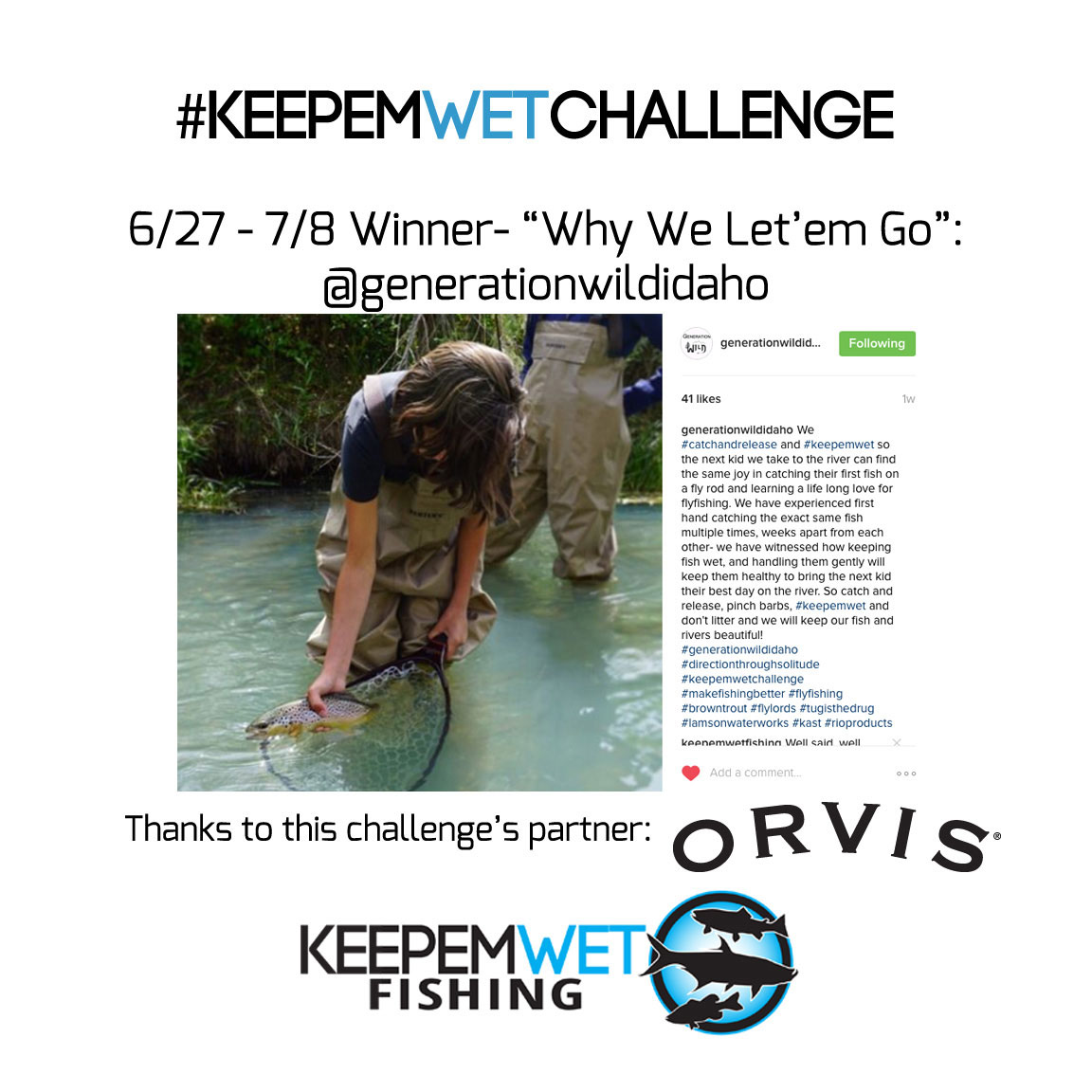
Catching Up With KeepemwetChallenge Winners
Follow along with Instagram and our #Keepemwetchallenge photo contests to win from our supporting partners!


5 Tips for Releasing Fish from Keepemwet Fishing
This is the ultra condensed version of "5 Tips for Releasing Fish" from Keepemwet Fishing ™
Keepemwet™ is about releasing fish in the best condition possible. It’s a motto for minimizing air exposure, eliminating contact with dry surfaces, and reducing handling. It’s a movement to empower anglers to take small, simple steps to responsibly enjoy and share fishing experiences. Our goal is to reduce angling impact on fisheries by uniting conscientious companies, organizations, and anglers to promote science based practices for handling fish that are caught then released.
Keepemwet is the evolution of releasing fish. Our fish! Your Fish!