Science Blog
Influence of hook type and live bait on the hooking performance of inline spinners in the context of catch-and-release brook trout Salvelinus fontinalis fishing in lakes
The objective of catch-and-release angling is for the fish to survive with minimal fitness consequences. However, fish survival can be compromised by a number of factors, especially anatomical hooking location. To evaluate whether hook type or bait influence hooking outcomes, we tested different combinations of hook (treble or single siwash hooks) and bait (hook tipped with worm or no worm) while angling for brook trout (Salvelinus fontinalis) with inline spinner-style fishing lures. Read More.

Physiological and behavioural consequences of cold shock on bonefish
The effects of cold shock on fish have rarely been assessed in sub-tropical regions despite the fact that such events
can occur as a result of upwelling, storms, or other climactic events that are expected to increase as a result of
global environmental change. Here, the sub-lethal physiological and behavioural consequences of cold shock
on bonefish... Read More.

KEEPEMWET FISHING REGISTERS WITH USPTO
Keepemwet Fishing™ is excited to receive registration with The United States Patent & Trademark Office for KEEPEMWET®. Thanks in great part to assistance provided by the University of Idaho, College of Law in Boise, Idaho.
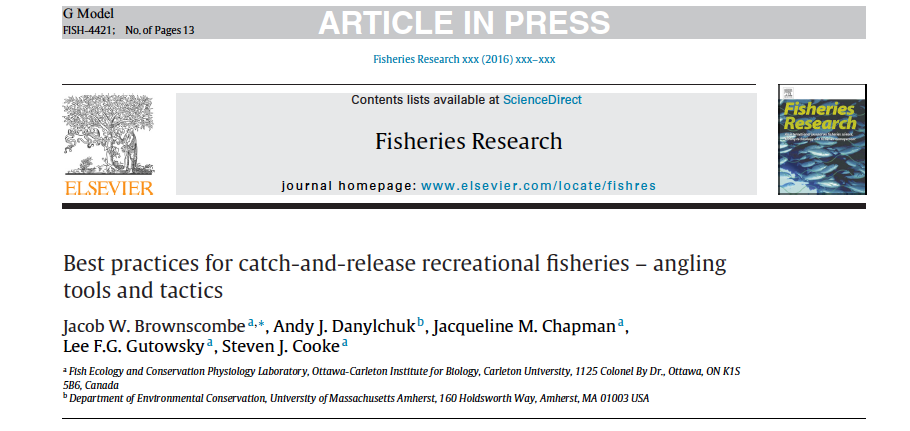
Best practices for catch-and-release recreational fisheries – angling tools and tactics
Just released study involving Keepemwet Fishing Science Advisor Dr. Andy Danylchuk.
"Catch-and-release angling is an increasingly popular conservation strategy employed by anglers vol-untarily or to comply with management regulations, but associated injuries, stress and behaviouralimpairment can cause post-release mortality or fitness impairments. Because the fate of released fishis primarily determined by angler behaviour, employing ‘best angling practices’ is critical for sustain-able recreational fisheries." Read more.